
1. Don’t oppose gaming in general
Even if gaming is not your thing or you think it is a waste of time, make sure you don’t make that too obvious to your child.
If you think gaming, or a specific game, is wrong by definition, your child will eventually no longer want to talk to you about it.
This does not mean you have to think it is all fantastic, but shouting that it is nonsense or a waste of time backfires.
2. Understand why your child enjoys the game
If you look into the game your child enjoys and plays a lot, talking about it becomes a lot easier. You don’t have to become a gamer yourself to learn a bit about what kind of game it is, what the challenge is and what is at stake. It also becomes easier to let your child tell you (and show you!) why they think it is so cool. Listen with interest and you will see that they react happily and enthusiastically to the time you make for them. You can now talk more easily with your child about the game and everything around it.
3. Set rules and be consistent
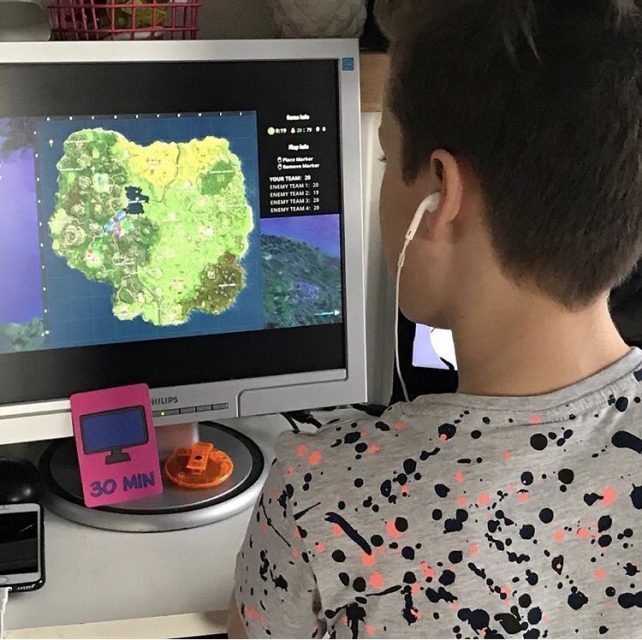
Every child needs limits and rules, including when it comes to gaming. Once you ‘get’ your child’s game or games, you also know which rules you can apply. A game of Fortnite lasts about 20 minutes on average, and then you have to be really good already. A game of DOTA2 takes about 45 minutes, and so on. That way you know that 2 hours of non-stop gaming is not necessary and you can agree on breaks. Align these breaks with other agreements, for example about homework or playing outside. Also give your child insight into their playing time so they become aware of their behaviour.
4. Gaming vs. eSports
If it is relevant to you, it is a good idea to look into the rise of eSports. It is too big a subject to explain in a few sentences, but assume that for almost every game there is a kind of “Premier League” for the best players in the world. Including huge tournaments, enormous sponsorships and thousands of spectators (online and offline). Want to know more in an hour? Check out the documentary ‘Free to Play’ on YouTube.
5. Trust your gut
Your gut feeling is usually right when it comes to whether your child is doing something good or something destructive. Gaming is often an escape from other kinds of problems. So if you notice more problems or see a combination of effects, be alert and trust your parental instinct. In the short term gaming may be less harmful than drugs or alcohol, but if it is an escape from something else, it is wise to focus on the combination and not just tackle the gaming.
Do you suspect an addiction and want more specialist information? Your GP can help you further and refer you to a specialist if necessary.
Source: Thomas van der Knijff of Grownhub
Making screen time agreements together?
Mytimingcards give your child clarity and responsibility: 24 time cards, 4 bonus cards, a timer and the Mytimingcards contract.